
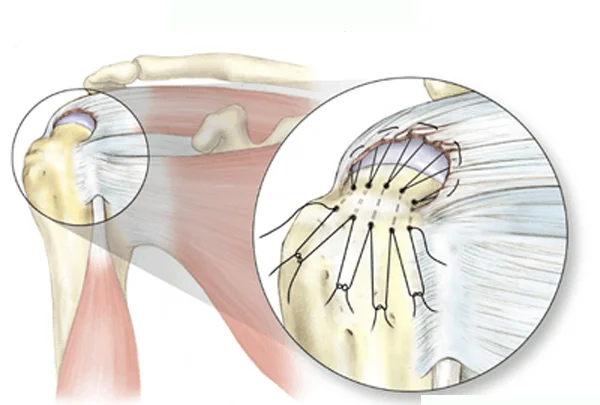
| Category | Rotator Cuff Injury |
About Rotator Cuff
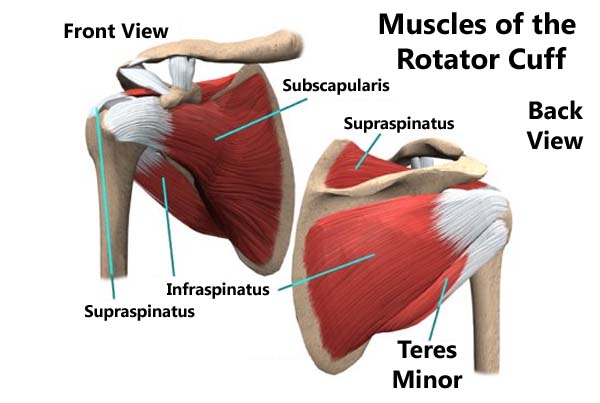
The rotator cuff is constituted by 4 muscles around the shoulder, namely Supraspinatus, Infraspinatus, Teres Minor, and Subscapularis. Its role is to stabilize the humeral head in its position during the range of movements of the shoulder joint.
Rotator Cuff Injury
Rotator cuff injury/tears occur in athletes playing sports like baseball, javelin throwing, tennis, fast bowlers, volleyball as all these sports involve vigorous throwing activities and shoulder rotations. It can also occur in sudden falls on the shoulder. Age-related wear and tear of rotator cuff occur in the elderly population.
Symptoms
Pain while using the shoulder, particularly overhead movements suggests a rotator cuff injury. With time, pain becomes constant, particularly during nighttime. Pain might radiate towards mid-arm too. The patient also complains of crepitus while moving the shoulder. In severe cases, there is loss of overhead motion i.e the patient is unable to lift the arm above shoulder level.
Diagnosis
Rotator cuff injury can be diagnosed in a sports clinic by a variety of clinical tests. An MRI scan is needed to confirm the diagnosis radiologically and also to localize the site and severity of the injury. A tear may involve any of the 4 muscles (partial tear or grade 1/2) or may involve all the muscles (complete tear or grade 3).
Treatment
Partial rotator cuff tears are managed by rest, supervised rehabilitation, and analgesics. However, if there is no improvement with this treatment, surgery is indicated. Complete tears in symptomatic patients also necessitate arthroscopic surgery.
Why Surgery?
A completely torn rotator cuff cannot heal by itself. Also, partial tears can advance into complete tears if proper treatment is neglected. With time, the torn rotator cuff muscles undergo fatty degeneration and lose the ability to function properly. Thus, timely surgical intervention can yield the best results and restore back the function of the rotator cuff.
Surgical Procedure
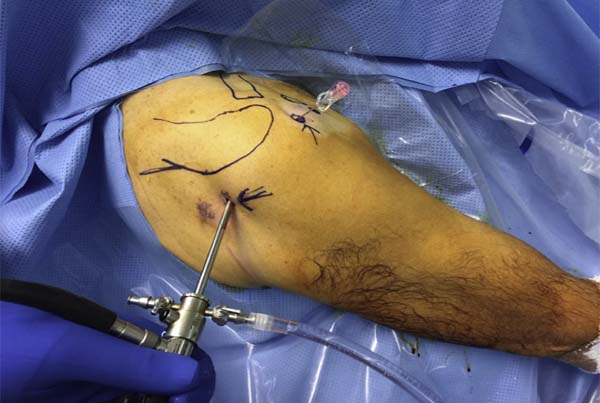
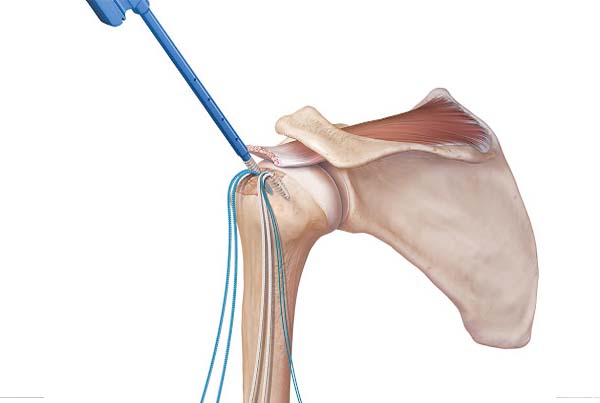
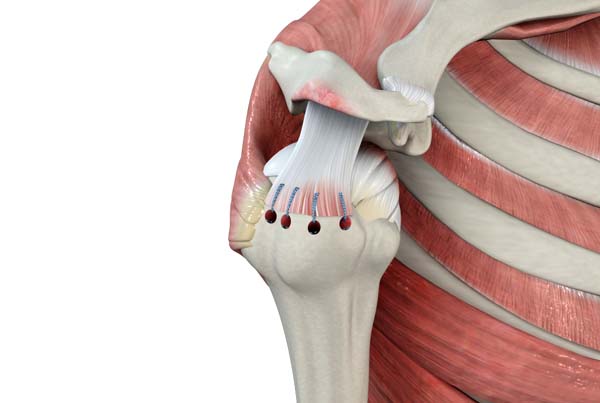
Arthroscopic rotator cuff repair is now the gold standard procedure for rotator cuff tears. An arthroscope is inserted in the shoulder, and the tear is visualized. Using arthroscopic instruments, the tear and the site of attachment of rotator cuff on bone are freshened. The cuff is then seated to its original site on bone using suture anchors (implant consisting of a small screw with sutures). There are a few techniques of repair, namely single-row repair and double-row repair. Double row repair is the preferred technique whenever possible.
Post-Operation Rehabilitation
The shoulder is kept immobilized in a special immobilizer for 6 wks post-surgery. Wrist and elbow mobilization exercises are started the next day after surgery. Gentle passive exercises can be started at 3-4 wks. Active assisted exercises are started after 6 weeks when the brace is removed. Complete overhead movement is achieved at 3-4 months post-surgery.


